
Zennor Parish is a walker’s paradise. Whether your interest is archaeology, wildlife, mining history, rock climbing, or simply enjoying the spectacular scenery and dramatic coastline, walking in Zennor has it all.

By the car park in the village is a mapboard that marks the Parish footpaths and distances. You can download a copy of the map here (PDF).
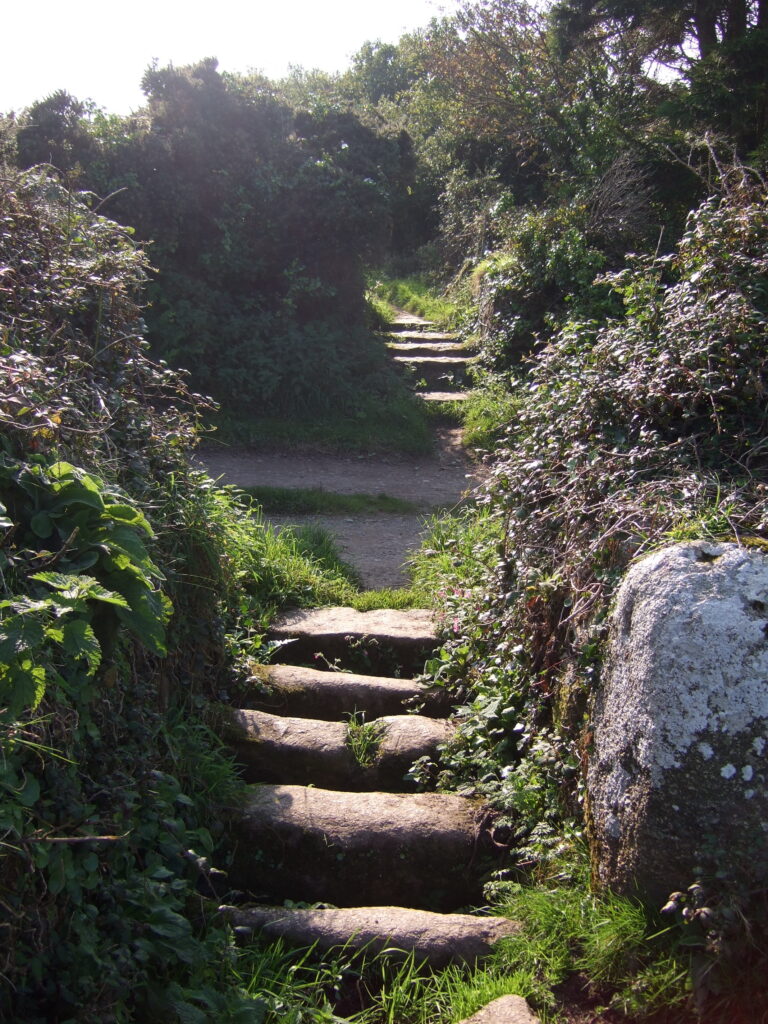
For an easy stroll, take the footpath down to Zennor headland for a breathtaking view across Pendour cove and Gurnard’s Head promontary. If you are feeling fit and adventurous, hike the coast path east along the cliffs towards St. Ives. Make sure to stop at the Carracks and watch the seals, before cutting back inland a short distance and returning via the fields to Zennor following the the church path.
You can also walk west from Zennor headland along the coast path, all the way out to the Gurnards Head promontory and beyond, cutting back through Treen. Both circular walks offer rugged scenery, a sense of wildness and serenity. But be warned: the coast path here is arduous, and can be treacherous. Wear appropriate footwear, and carry plenty of water.

For a different inland walk, ramble through Foage Valley and up onto the windswept moors and rocky outcrops of Tregerthen hill. Here you will be rewarded with unparalleled views of our prehistoric landscape and everchanging skies. Hidden nearby is Zennor Quoit, the largest portal dolmen in the world. High on the downs a section of the Tinner’s way marks the southern boundary between Zennor Parish and neighbouring Towednack and Madron Parishes.
Megalithic stone circle located about 1km inland from Gurnards Head.

Located on the moors above Eagles Nest. Accessible from a track that starts from the coast road opposite the house or from the Tinner’s Way across Mill Downs.
A quoit, also known as a cromlech or dolmen was a megalithic dead house that contained the disarticulated bones of members of the local community. More than just a burial chamber, a quoit was a place linking the ancestors to the living.
Dr Liz Thompson


